


Top Crypto Gambling Sites in Australia
We compare crypto gambling sites in Australia based on Licensing & Regulation, Provably Fair Testing, Withdrawal Speed, Bonus Fairness, Game Library & Providers, Payment Flexibility, and Customer Support. Crypto payments in these platforms are mainly used for deposits and withdrawals, while game balances may vary depending on the operator.
The ranking below presents reviewed platforms and their key features for users comparing cryptocurrency payment options in 2026.

 MASTERCARD
BANK TRANSFER
CRYPTO
 MASTERCARD
BANK TRANSFER
CRYPTO
 MASTERCARD
BITCOIN
LITECOIN
E-WALLET
 MASTERCARD
PAYID
CRYPTO
MIFINITY
 MASTERCARD
PAYID
BITCOIN
SKRILL
MIFINITY








Detailed Crypto Casinos Review for Australian Players
We review crypto casinos by analysing available platform information, including payment methods, game-related features, bonuses, and user support options. The following reviews focus on confirmed details that help Australian players compare cryptocurrency-enabled gambling platforms.
TAB66 Crypto Review
TAB66 combines digital currency payments with familiar banking options. Its payment selection includes Bitcoin and Ethereum alongside cards and bank transfers, giving players several ways to manage account funds.
- Cryptocurrencies: Bitcoin and Ethereum.
- Card payments: Visa and Mastercard.
- Banking options: bank transfers and Osko.
We highlight the combination of crypto and local payment channels. AUD account settings also provide a familiar currency for Australian readers comparing the platform’s payment features.
LV55 Crypto Review

LV55 includes cryptocurrency transactions within a broader selection of financial methods. Players can choose digital assets or conventional payment channels to suit how they prefer to handle their balance.
- Digital assets: Bitcoin and Ethereum.
- Traditional methods: bank transfers and Visa/Mastercard.
- Currency selection: AUD and other account currencies.
The choice extends beyond the payment method itself to the account’s currency settings. We consider this flexibility useful for players comparing crypto funding with everyday banking alternatives.
7Bit Crypto Review
7Bit combines cryptocurrency payments with AUD account support. Players can fund their balance using a selection of digital assets, with automatic conversion when the payment currency differs from the active account currency.
- Established coins: Bitcoin, Ethereum and Litecoin.
- Further options: USDT, XRP, Dogecoin, Bitcoin Cash, Tron, Cardano and BNB.
- Account flexibility: AUD alongside cryptocurrency currencies.
We highlight the currency range as a practical feature for players managing different assets within one account.
Neospin Crypto Review

Neospin provides cryptocurrency deposits and withdrawals with separate limits for each transaction type. Its payment selection covers seven digital assets, giving players several ways to move funds between their wallet and playing balance.
- Supported assets: BTC, ETH, LTC, BCH, USDT, DOGE and XRP.
- USDT minimums: 20 for deposits and 30 for withdrawals.
- Operator fees: crypto transactions are listed as free.
The published thresholds make it easier to compare methods against the amount a player plans to transfer.
Wild Tokyo Crypto Review

Wild Tokyo presents cryptocurrency funding through a cashier displaying an AUD balance. Players select their preferred asset from a menu that includes both established coins and newer blockchain currencies.
- Available assets: Bitcoin, Ethereum, Litecoin, Tron, Solana and XRP.
- Stablecoin option: USDT through the TRC-20 network.
- Payment interface: cryptocurrency selection within the deposit form.
The separate network label for USDT helps players match their sending wallet to the selected transfer route when preparing a deposit.
Winshark Crypto Review

Winshark’s payment selection spans several blockchain networks and includes two major stablecoins. Players holding different digital assets can choose a compatible option from the platform’s payment menu.
- Main currencies: Bitcoin, Ethereum, Litecoin and Bitcoin Cash.
- Alternative assets: Solana, Cardano, Tron, XRP and Dogecoin.
- Stablecoins: USDT and USDC.
We note the inclusion of both USDT and USDC as a useful distinction. This expands the payment selection for players who prefer dollar-linked tokens when managing their funds.
SkyCrown Crypto Review
SkyCrown organises payments around the selected wallet currency, with AUD and multiple cryptocurrencies available. Players choose their currency before depositing and request payments in the currency of that wallet.
- Crypto selection: BTC, ETH, LTC, BCH, XRP and Dogecoin.
- Other supported assets: USDT, BNB, Cardano and Tron.
- Wallet settings: currency selection before account funding.
This structure connects the initial account setup with subsequent transactions. We focus on that consistency when assessing how clearly the platform handles cryptocurrency balances.
Lukki Crypto Review
Lukki sets individual deposit thresholds for its supported cryptocurrencies. Players can compare the starting amount for each asset directly, making the payment selection useful for planning transfers of different sizes.
- Bitcoin deposits: from 0.0001 BTC.
- Litecoin funding: from 0.01 LTC.
- Ethereum minimum: 0.002 ETH.
The range also includes Bitcoin Cash, XRP, Dogecoin, Cardano, USDT, Tron and BNB. Crypto deposits are listed without an operator fee, giving players specific figures to consider when choosing how to fund their account.
How We Rank Crypto Casinos
We rank crypto casinos by assessing specific categories that affect platform transparency, payment conditions, content quality, and user experience. Each area is reviewed separately to compare operators using the same evaluation framework.
Licensing & Regulation
Licensing and regulation cover the legal information connected with a platform’s operation. We look at the company behind the site and the jurisdiction that issued its licence. Published terms also help readers understand which rules apply to their accounts and payments.
- Licence status: regulatory details and the jurisdiction linked to the operator.
- Operator transparency: company information and published legal documentation.
- Account terms: rules covering registration, verification and platform use.
Provably Fair Testing
Provably Fair systems give players a way to check how game results are generated. We examine the verification tools provided and the information explaining how they work. For games that use an RNG instead, we look for details about testing and randomisation.
- Verification mechanisms: tools used to check the integrity of game outcomes.
- Randomisation systems: information about RNG technology and result generation.
- Player access: whether verification instructions are available and easy to follow.
Withdrawal Speed
Withdrawal speed depends on both the operator’s review and the payment network. We consider the estimated time for approving a request as well as the transfer itself. Account checks and transaction limits can also affect when funds reach the player.
- Processing times: published estimates for reviewing and sending withdrawals.
- Payment procedures: conditions that affect completion of a transaction.
- Account checks: verification requirements that may apply before a payout.
Bonus Fairness
Bonus fairness depends on whether players can understand an offer before claiming it. We review wagering requirements, eligible games and the time allowed to use a promotion. The treatment of winnings and any withdrawal restrictions are considered as well.
- Wagering rules: requirements connected with bonus funds and withdrawals.
- Promotion terms: eligibility criteria, time limits and restrictions.
- Game contribution: how much different games count towards wagering.
Game Library & Providers
A varied game library gives players more choice across styles and formats. We look at the selection of slots, table games and live dealer titles, along with the studios supplying them. Search and category filters also help users find games that suit their preferences.
- Game categories: the range of slots, table games and other formats.
- Software providers: companies supplying titles to the platform.
- Library navigation: search tools, filters and category organisation.
Payment Flexibility
Payment flexibility covers the ways players can deposit and withdraw funds. We consider supported cryptocurrencies alongside cards and banking methods. Network selection, minimum amounts and possible fees are relevant when comparing the overall conditions.
- Payment options: supported cryptocurrencies, cards and banking methods.
- Withdrawal compatibility: methods available for receiving payouts.
- Transaction conditions: limits, network choices and applicable fees.
Customer Support
Customer support gives players a way to resolve questions about accounts, payments and promotions. We look at how assistance can be reached and what information is available through help pages. Response quality also matters when a question needs further investigation.
- Support channels: available ways to contact the team.
- Service availability: published support hours and access to assistance.
- Response quality: clarity and usefulness of answers to user enquiries.

Is Crypto Gambling Legal in Australia?
Crypto gambling in Australia operates within a specific legal framework. The Interactive Gambling Act 2001 restricts certain online gambling services, while many crypto casinos available to Australian users operate from offshore jurisdictions. We review the main legal factors that affect operators and players.
Interactive Gambling Act 2001
The Interactive Gambling Act 2001 (IGA) is the main federal law regulating online gambling services in Australia. The legislation focuses primarily on operators providing gambling products to Australian residents.
- Operator restrictions: certain online gambling services cannot be offered to Australians under the IGA.
- Regulatory focus: the law applies mainly to service providers rather than individual users accessing overseas platforms.
- Service compliance: operators must consider Australian gambling requirements when offering services to residents.
Offshore Crypto Casino Restrictions
Offshore crypto casinos are platforms based outside Australia that operate under the rules of their registered jurisdiction. These sites may not be regulated by Australian gambling authorities.
- Regulatory differences: offshore platforms follow their own jurisdiction’s requirements rather than Australian licensing rules.
- Player considerations: users should review operator information, payment conditions, and available protections before using such services.
- Legal responsibility: restrictions under Australian gambling law primarily apply to operators providing prohibited services.
Crypto Winnings Tax
Crypto winnings and later cryptocurrency transactions can have different tax implications in Australia. Gambling outcomes and digital asset activities should be considered separately.
- Gambling winnings: casual gambling winnings are generally treated differently from income-producing activities.
- Crypto disposal: selling, exchanging, or using received cryptocurrency may create separate tax events.
- Record keeping: users should maintain transaction records for cryptocurrency activity.
This information is general in nature and does not replace professional tax advice. Individual tax outcomes depend on personal circumstances and activity.
No-KYC Crypto Casinos
No-KYC crypto casinos are platforms that reduce or remove standard identity verification procedures during account registration. We review this model from a technical and compliance perspective, including how KYC processes work, why operators use them, and what limitations users should consider.
How It Works
No-KYC models use simplified account verification procedures compared with traditional gambling platforms. KYC requirements are designed to support identity checks and anti-money laundering (AML) controls, while some crypto-based platforms use alternative account management systems.
Key aspects include:
- Account verification: some platforms allow registration with limited personal information before additional checks are required.
- Transaction monitoring: payment activity can still be reviewed through security and compliance procedures.
- Cryptocurrency payments: digital assets are commonly used because transactions do not rely on traditional banking channels.
Verification Limits
Verification limits define when a platform may request additional user information after account creation. These requirements often depend on account activity and transaction size.
- Withdrawal reviews: larger payout requests can require additional identity checks.
- Security controls: unusual payment patterns may trigger account verification procedures.
- Account access: some features can remain restricted until verification requirements are completed.
Risks to Consider
No-KYC platforms require additional attention to regulation, account security, and user protection factors.
- Limited oversight: some platforms operate outside established regulatory frameworks.
- Reduced protection: dispute resolution and complaint procedures may differ from regulated services.
- Platform transparency: users should review operator information, payment conditions, and security practices before making financial transactions.

Which Crypto Should You Use in Australia?
Different cryptocurrencies affect deposits and withdrawals through transaction speed, network fees, price stability, and platform support. We compare common digital assets used for crypto payments to show how technical differences influence practical use for Australian players.
Bitcoin (BTC)
Bitcoin (BTC) was launched in 2009 as the first cryptocurrency and remains one of the most commonly supported digital assets.
- Network & speed: Bitcoin transactions require blockchain confirmations, with a typical confirmation time often ranging from around 10 minutes to longer periods during high network demand.
- Fees: Bitcoin fees depend on network congestion and can increase when more users compete for block space.
- Price stability: BTC value can fluctuate significantly, which may affect the value of funds between deposit and withdrawal.
- Platform support: Bitcoin is supported by many cryptocurrency services and payment providers.
Ethereum (ETH)
Ethereum (ETH) is a blockchain network used for cryptocurrency transfers and smart contract applications.
- Network & speed: ETH transactions are usually confirmed faster than Bitcoin, although timing depends on network activity and required confirmations.
- Fees: Ethereum network fees change based on blockchain demand and can vary significantly between periods of low and high activity.
- Price stability: ETH remains exposed to cryptocurrency market movements, which can affect transaction value.
- Platform support: Ethereum is widely supported by services accepting digital asset payments.
Litecoin & Bitcoin Cash
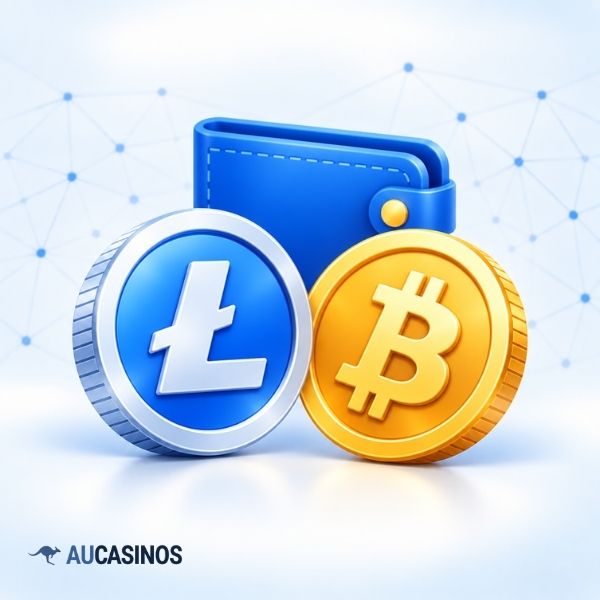
Litecoin (LTC) and Bitcoin Cash (BCH) are separate cryptocurrencies with different technical designs and transaction characteristics.
- Network & speed: Litecoin uses a faster block generation model than Bitcoin, with blocks created approximately every 2.5 minutes, while Bitcoin Cash follows a Bitcoin-based structure with larger block capacity.
- Fees: LTC and BCH transactions are generally associated with lower network costs compared with Bitcoin, although fees depend on current blockchain conditions.
- Price stability: both assets can experience market price changes that influence the value of deposits and withdrawals.
- Platform support: Litecoin is more commonly supported across cryptocurrency services, while Bitcoin Cash availability depends more on the specific platform.
Stablecoins (USDT, USDC)
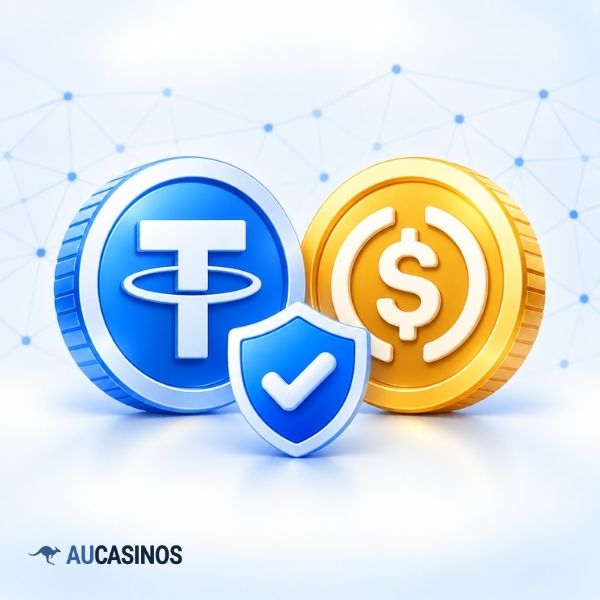
Stablecoins such as USDT and USDC are cryptocurrencies designed to maintain a value linked to the US dollar.
- Network & speed: transaction speed depends on the blockchain used. USDT and USDC can operate on networks including Ethereum (ERC-20), Tron (TRC-20), and other supported chains with different processing characteristics.
- Fees: ERC-20 transfers can involve higher network costs, while networks such as TRC-20 are often used when lower transaction fees are preferred.
- Price stability: stablecoins are designed to reduce exposure to the price movements common with BTC, ETH, LTC, and BCH.
- Platform support: users need to select the correct network supported by both the sending and receiving platforms.
For Australian users, the suitable cryptocurrency depends on the priority. BTC and ETH provide broad support but involve higher price volatility. Litecoin and Bitcoin Cash can be considered for lower-cost transfers where supported, while stablecoins are often used when maintaining a more predictable transaction value is the main objective.
Crypto Casino Bonuses
Crypto casino bonuses use different reward formats with conditions that affect their use, including wagering rules, eligibility requirements, and withdrawal restrictions.
Bonus terms vary between platforms and can change over time. Users should check current T&Cs before claiming any offer. Gambling services are intended for users aged 18+ and should be used responsibly.
Wagering Requirements
Wagering requirements define how many times bonus funds or bonus-related winnings must be played before withdrawal eligibility.
- Wagering multiplier: requirements are commonly expressed as a multiplier, such as x20 or x30, meaning the bonus amount must be played through multiple times.
- Game contribution: slots often contribute more towards wagering progress, while table games and live dealer games may contribute less or be excluded.
- Withdrawal conditions: bonus funds usually remain restricted until the required playthrough is completed.
Welcome Bonuses & Free Spins

Welcome bonuses are promotional offers provided to new users after registration or an initial deposit.
- Bonus structure: offers may include deposit matches, free spins, or combined rewards.
- Activation rules: users may need to complete specific steps before receiving the promotion.
- Conditions: larger rewards often include higher wagering requirements or additional restrictions.
No-Deposit Bonuses

No-deposit bonuses provide rewards without requiring an initial payment from the user.
- Reward format: common examples include free spins or small bonus balances linked to account registration.
- Eligibility rules: access may depend on account requirements, verification, and promotional conditions.
- Withdrawal limits: these offers usually include restrictions described in the applicable wagering and bonus terms.
Cashback & Reload Offers
Cashback and reload offers are designed for existing users and are usually connected with previous account activity.
- Cashback calculation: returned funds depend on the stated cashback rate and eligible activity.
- Reload structure: repeat deposit offers may include separate bonus amounts, wagering requirements, and time limits.
- Reward conditions: higher cashback rates can include stricter promotional rules.
VIP & Rakeback Programs

VIP and rakeback programs provide rewards based on ongoing user activity.
- VIP levels: membership tiers may depend on deposits, gameplay activity, or loyalty points.
- Rakeback calculation: returned amounts depend on the platform’s formula and eligible transactions.
- Program conditions: higher tiers may include different requirements and reward structures.
Popular Casino Games at Crypto Sites
Crypto sites offer different gaming categories, with each format having specific mechanics and features that influence how players use cryptocurrency-based balances. We review popular game types and their characteristics within crypto gambling platforms.
Online Pokies
Online pokies are digital slot games that use reels, paylines, and bonus features similar to traditional slot formats. On crypto platforms, the main difference is usually the payment method rather than the game mechanics.
- Game mechanics: pokies include paylines, multipliers, free spins, and bonus rounds that determine gameplay structure.
- Crypto use: wagers and balances can be displayed in supported digital currencies or converted values depending on the platform.
Crash Games

Crash games use a multiplier-based format where the round continues until a randomly generated stopping point. Many crypto platforms feature crash games because of their transparent result systems.
- Provably fair systems: some crash games use cryptographic verification methods, allowing users to check whether results were generated fairly.
- Gameplay structure: players decide when to exit a round, with higher multipliers involving greater risk.
Live Dealer Games

Live dealer games combine streamed gameplay with traditional table game rules. Crypto platforms may offer these games through specialised live casino formats.
- Game types: common options include blackjack, roulette, baccarat, and game shows.
- Transparency features: live formats focus on real-time dealing, while some platforms provide additional verification tools for digital transactions.
Crypto Poker
Crypto poker refers to poker platforms where cryptocurrency is used for account balances, buy-ins, or withdrawals.
- Game structure: formats include cash tables, tournaments, and player-versus-player games.
- Crypto features: digital currency payments can simplify transactions between poker balances and supported wallets.
Mobile Crypto Gambling
Mobile crypto gambling refers to using cryptocurrency-based gaming platforms through smartphones and tablets. When choosing a platform for mobile use, users should check how easily they can access games, manage transactions, and interact with account features from a smaller screen.
Key mobile aspects include:
- Browser and app access: many crypto gambling platforms use mobile-optimised websites instead of native applications due to app store restrictions. Browser access should provide stable navigation without additional installation requirements.
- Wallet compatibility: mobile users should check whether the platform works with common cryptocurrency wallets and supports convenient transaction methods.
- Transaction management: mobile interfaces should allow users to review balances, manage deposits, and request withdrawals with clear payment information.
- Usability: page loading speed, navigation structure, and device compatibility affect the overall mobile experience.
Mobile features are a practical consideration for users who prefer managing cryptocurrency transactions from smartphones, but they represent only one aspect of evaluating a crypto gambling platform.

How to Identify Unsafe Crypto Casinos
Unsafe crypto casinos can often be identified before registration by checking regulatory information, payment conditions, promotional terms, and reputation signals. We focus on warning signs that help users assess transparency and reduce the risk of choosing unreliable platforms.
Licensing Red Flags
Licensing information helps users understand the regulatory status and ownership details of a platform. Warning signs include:
- Missing licence information: a platform that does not clearly state its regulatory status or operating details requires additional review.
- Unverified claims: licence numbers, approvals, or regulatory statements should be checked against official sources where possible.
- Limited ownership details: unclear company information can make it difficult to understand who operates the service.
Bonus Warning Signs
Bonus conditions should be reviewed before accepting promotional offers because restrictions can affect withdrawal eligibility.
- Complex wagering rules: unclear playthrough requirements or restrictive game contribution rules can reduce the practical value of a bonus.
- Unrealistic promotions: extremely high bonus percentages or unusually generous offers require careful review of the attached conditions.
- Withdrawal restrictions: maximum limits, excluded payment methods, or additional requirements should be clearly disclosed.
Fake Reviews
Fake reviews can create an inaccurate impression of a platform’s reputation. Users should look for:
- Repeated wording: identical reviews across different websites may indicate artificial content.
- Lack of specific details: reviews without information about payments, support, or platform conditions provide limited value.
- Unbalanced feedback: only positive comments without mentioning limitations may require further verification.
Withdrawal Problems
Withdrawal issues are one of the most important warning signs when assessing a crypto casino.
- Delayed payouts: repeated unexplained delays can indicate payment processing problems.
- Unexpected verification requests: additional checks that appear only after a withdrawal request should be reviewed carefully.
- Unclear payment rules: platforms should provide clear information about withdrawal limits, processing times, and requirements.
Player Safety
Player safety focuses on tools that help users control gambling activity and access support when needed. Deposit limits, self-exclusion features, and support resources should be reviewed alongside the platform’s regulatory status, as protection measures can vary between regulated operators and offshore crypto platforms.
Deposit Limits
Deposit limits allow users to control how much money can be added to an account during a selected period.
- Limit settings: platforms may offer daily, weekly, or monthly deposit restrictions through account controls.
- Transaction control: crypto deposits depend on platform-based limits, as external banking restrictions may not apply to blockchain payments.
- Platform conditions: users should check whether limits include waiting periods, modification rules, or other account restrictions.
Self-Exclusion Tools
Self-exclusion tools allow users to restrict access to gambling accounts for a selected period.
- Account restrictions: platforms may provide temporary or permanent account blocking options.
- Offshore limitations: on unregulated offshore platforms, the effectiveness of self-exclusion depends on the operator’s own policies and enforcement practices.
- Access management: users should review how restrictions affect gameplay, deposits, and future account access.
Support Resources
Support resources provide assistance and information for users who need help managing gambling behaviour.
- Immediate assistance: users experiencing gambling-related harm can contact the National Gambling Helpline on 1800 858 858 or access Gambling Help Online support services.
- Platform support: operators may provide responsible gambling information, account controls, and contact channels for user assistance.
- External resources: independent gambling support organisations can provide confidential guidance beyond the services offered by a platform.
Responsible gambling information is general guidance and does not replace professional advice. Gambling services should only be used by adults aged 18+.

Crypto Casino FAQ
Crypto gambling is affected by the Interactive Gambling Act 2001, which restricts certain online gambling services from being offered to Australian residents. These restrictions mainly apply to operators, while users should review the legal status and conditions of offshore platforms before using them.
KYC requirements depend on the platform. Some no-KYC crypto casinos use simplified verification, but additional checks may apply for withdrawals, security reviews, or larger transactions.
Withdrawal speed depends on the platform, payment method, blockchain network, and processing conditions. Crypto transactions can differ from bank transfers, so users should check payout terms and withdrawal procedures before selecting a platform.
Crypto winnings and later cryptocurrency transactions can have different tax implications. Gambling outcomes and events such as selling or exchanging crypto assets should be considered separately, with tax treatment depending on individual circumstances.
Self-exclusion options depend on the platform’s policies. Offshore crypto casinos may not provide the same level of enforcement as regulated operators, so users should review available account protection tools before relying on them.
Users should check withdrawal terms, keep transaction records, and contact platform support. Withdrawal problems can be a warning sign of an unsafe platform, especially when combined with unclear rules or limited dispute options.